Common Appliance Repair Mistakes Homeowners Make When Troubleshooting Alone
This guide explains the most common appliance repair mistakes homeowners make when they troubleshoot alone. A few quick checks are often safe and helpful. Other shortcuts can lead to bigger damage, higher bills, or safety risks. Here is what to avoid, and when it is smart to stop.
Many homes in Clementon, NJ, have older kitchens and laundry rooms, from ranch styles to Cape Cods near Clementon Lake. Older appliances may have worn parts, so careful choices matter even more. Good appliance repair starts with knowing what you can check and what you should leave alone.
Safe First Checks Before You Call for Appliance Repair
A few simple checks can rule out easy problems and may save you a service call.
▸ Confirm the appliance is plugged in and the outlet has power.
▸ Check whether a breaker has tripped.
▸ Look at the display and write down any error code.
▸ Make sure the water valve is open on a washer or dishwasher.
▸ Check that the door or lid latches all the way.
Write down the model number too. It is usually on a label inside the door or on the back. A technician can often use these details to plan the visit and bring the right tools.
Mistake 1: Ignoring Gas and Electrical Safety
Gas and electricity are the biggest safety risks when you work on any appliance.
If you smell gas near a range, oven, or dryer, do not touch switches or light a flame. Leave the home right away, then call your gas utility or 911 from outside.
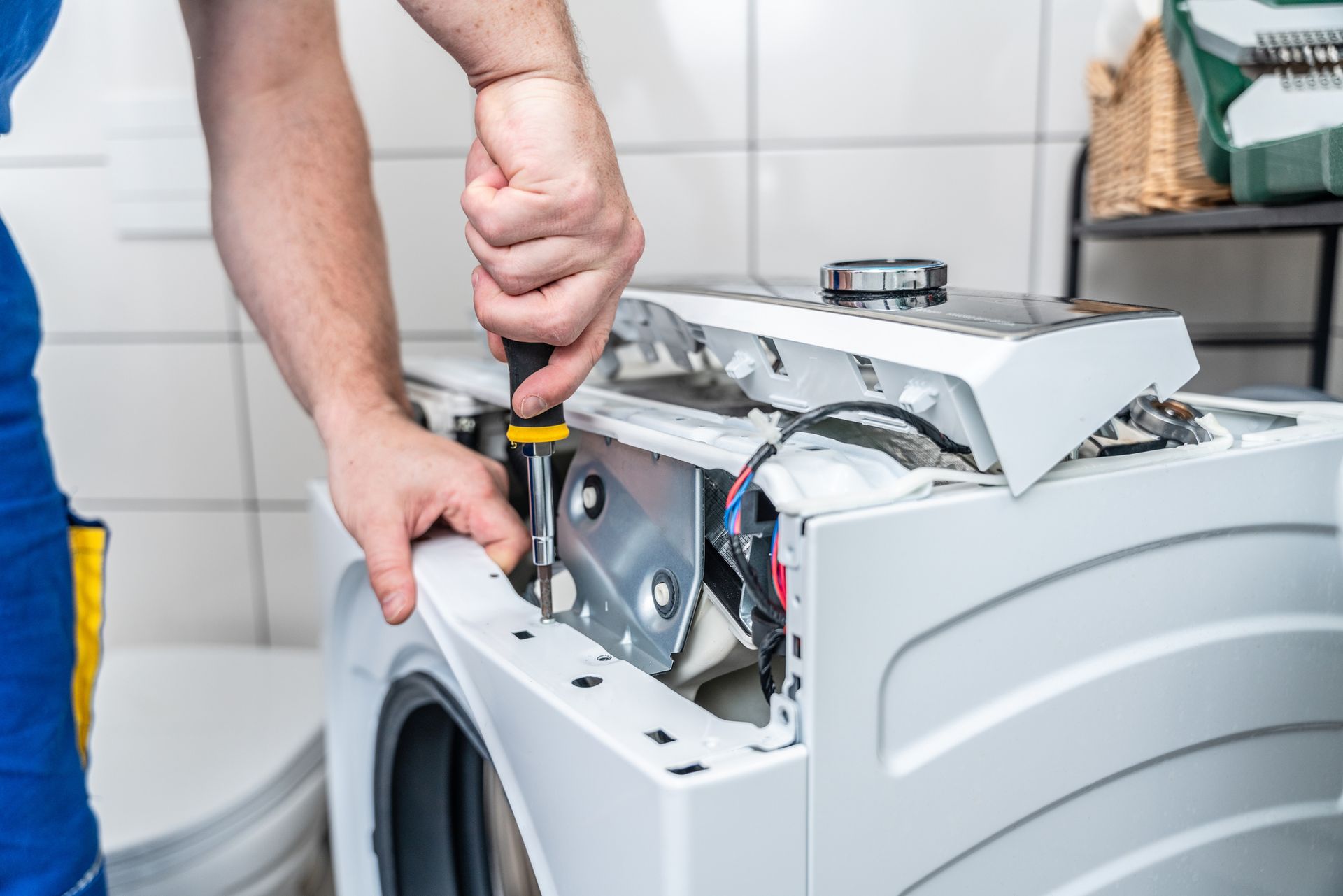
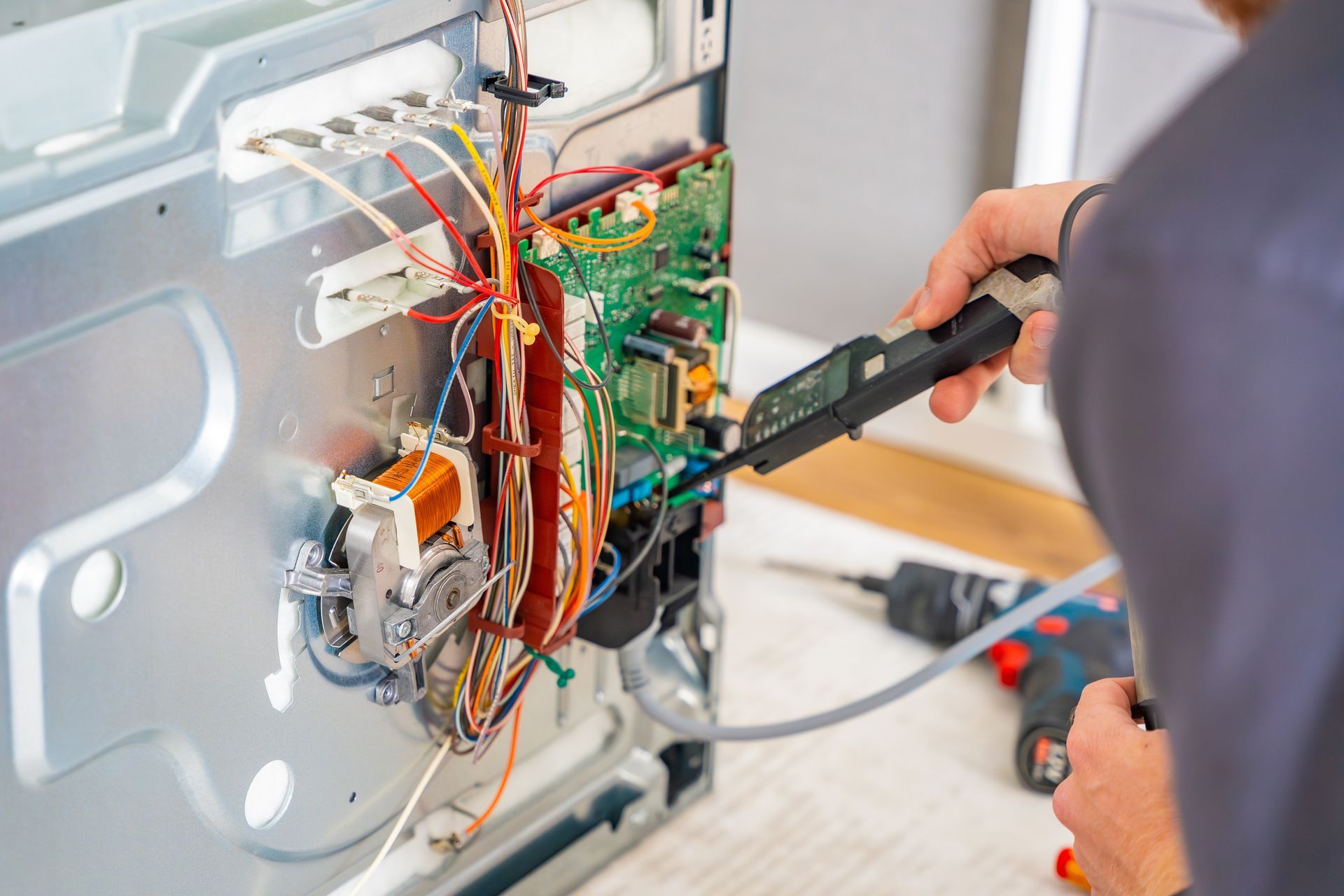
For electrical problems, stop using the appliance if you see sparks or smell burning. Turn off the breaker if it is safe to reach. Never open a panel or touch wiring while the appliance is plugged in. A technician who handles oven and range repair can test these parts safely.
Mistake 2: Forcing Stuck or Jammed Parts
Force can turn a small problem into a broken part.
A washer door that will not open or a frozen freezer drawer can tempt you to pull harder. Handles, hinges, and latches often snap under stress. That can turn a simple fix into a bigger one.
Instead, unplug the appliance and wait a few minutes. Check for a lock cycle, a water level, or ice buildup. If it still will not budge, stop there.
Mistake 3: Using the Wrong Replacement Parts
A part that looks the same is not always the right part for your model.
Appliance makers often change parts from year to year. A close match may not fit well, or may not handle the same power load. That can hurt performance and may affect your warranty.
Always use your exact model number when you shop for parts. If your appliance is still covered, check your paperwork before you start any repair.
Mistake 4: Guessing at the Cause
Guessing can lead you to pay for parts you did not need.
It is common to swap one part, then another, hoping the problem goes away. Many symptoms have more than one cause. A fridge that is not cooling could point to a fan, a sensor, or a control issue.
A trained technician uses tests to find the real cause first. That order often saves time and money.
Mistake 5: Waiting Too Long to Call
Waiting can let a small issue spread to other parts.
A slow leak can damage floors and cabinets. A fridge that runs warm can spoil food. A machine that trips the breaker again and again may have a deeper electrical fault. Quick appliance repair can often limit the damage that waiting causes.
Can You Fix an Appliance Yourself?
Some light tasks are safe for most homeowners, but many repairs are best left to a trained technician.
These tasks are often safe:
▸ Clean the lint filter on a dryer.
▸ Wipe the door gaskets on a fridge or washer.
▸ Clear the drain filter on a dishwasher.
▸ Replace a refrigerator water filter if the manual says to.
Leave these tasks to a technician:
▸ Anything that involves gas lines or burners.
▸ Wiring, control boards, or heating elements.
▸ Sealed cooling systems in refrigerators and freezers.
▸ Any repair that needs a panel removed.
When to Stop and Call a Technician
Stop and call a technician when a problem involves safety or keeps coming back.
Watch for these signs:
▸ A gas smell, sparks, or a burning odor.
▸ Water near plugs or wiring.
▸ A breaker that trips again and again.
▸ An error code that returns after a reset.
▸ Strange noises that do not go away.
Take a photo of the error code and the model label. Share both when you call. This helps the technician arrive prepared.
Get Help With Appliance Repair in Clementon, NJ
Knowing your limits is the best troubleshooting skill you can have.
Appliance Werks provides appliance repair in Clementon, NJ, for homeowners throughout Camden County. The team works on refrigerators, washers, dryers, ovens, stoves, and dishwashers. You can also read about the business on its Appliance Werks Google Business Profile.
Ready for help? Call (856) 685-7412 or contact us to request a free estimate.